The Grand Valley is known for its beautiful orchards, vineyards, farms, and agricultural heritage. From the peach orchards of Palisade to backyard fruit trees in Grand Junction and Fruita, our growing climate makes this area a wonderful place to enjoy fresh, locally grown produce.
However, growing fruit also comes with challenges, including insects and diseases that can damage trees, destroy crops, and threaten local agriculture.
At a recent real estate education event, we had the opportunity to hear from Ryan Surad with the Upper Grand Valley Pest Control District (UGVPCD) about agricultural pests affecting Mesa County and the work being done to control them.
Whether you own an orchard, have a few fruit trees in your backyard, or are considering purchasing property in the Grand Valley, understanding these pests can help you become a more informed property owner.
Why Agricultural Pest Control Matters in the Grand Valley
Agriculture is an important part of Mesa County’s economy and history. Our local orchards, vineyards, and farms depend on healthy plants and productive growing seasons.
Unfortunately, pests don’t recognize property lines. An unmaintained apple, peach, or cherry tree in someone’s backyard can potentially become a breeding ground for insects that spread to nearby commercial orchards. This is especially concerning for organic growers, who may have fewer treatment options available while maintaining their organic certification.
For homeowners, this means that maintaining fruit trees is about more than keeping a yard looking nice. It can also help protect the agricultural businesses that make the Grand Valley unique.
Common Agricultural Pests in Mesa County
The Upper Grand Valley Pest Control District monitors and addresses several insects and plant diseases that threaten local agriculture. The following are among the pests included in the district’s 2026 program.
Codling Moth
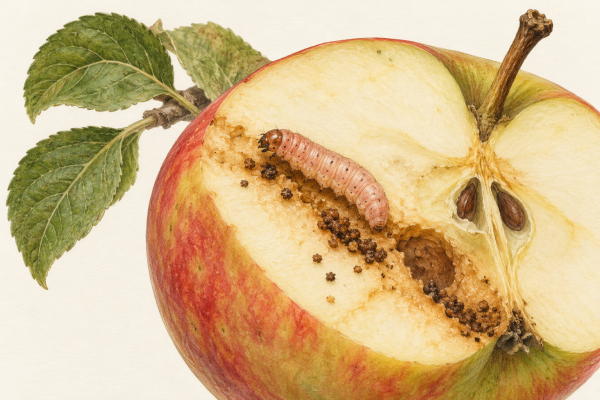
Primary hosts: Apples and pears.
Codling moths are among the most common pests affecting apple and pear trees. Their larvae tunnel directly into developing fruit, feeding inside and leaving damaged or unusable produce.
While apples and pears are their primary hosts, they may occasionally affect other fruits.
Codling moths can produce approximately two to four generations per growing season, depending on temperatures and local conditions. This makes monitoring important throughout the warmer months.
Homeowners with apple or pear trees should watch for small entry holes, damaged fruit, and fruit that drops prematurely.
Cytospora Canker
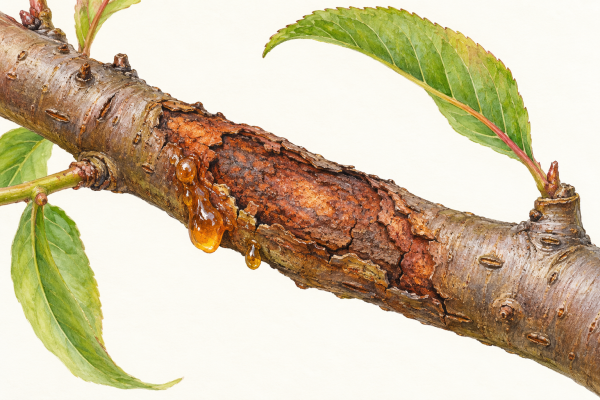
Primary hosts: Peach trees and other stone fruit trees.
Unlike the insects on this list, Cytospora canker is a fungal disease that affects the woody portions of trees, including branches and trunks.
The disease can enter through wounds or damaged bark, creating sunken areas known as cankers. As the infection spreads, branches may weaken or die.
There is no reliable cure once a tree becomes infected. However, proper pruning, avoiding unnecessary injuries, and maintaining healthy trees can help reduce the risk.
For property owners with peach trees, preventative maintenance is especially important.
Grape Phylloxera
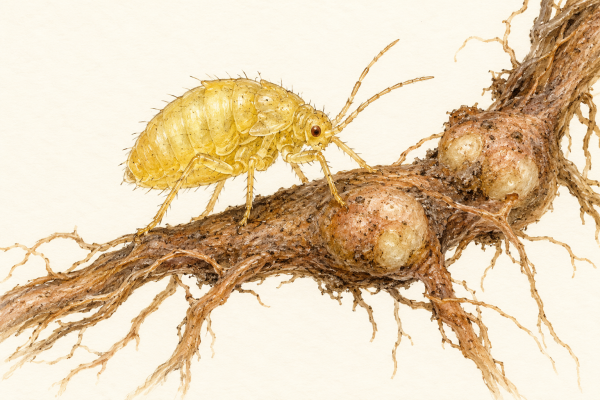
Primary hosts: Grapevines.
Grape phylloxera are tiny, aphid-like insects that feed on grapevine roots and, in some cases, leaves.
Root feeding can weaken vines, stunt their growth, and eventually cause plant death in susceptible grape varieties.
Because vineyards are an important part of the Palisade agricultural community, this pest is a particular concern for grape growers.
Using resistant rootstocks and following recommended vineyard management practices can help protect susceptible vines.
Greater Peachtree Borer
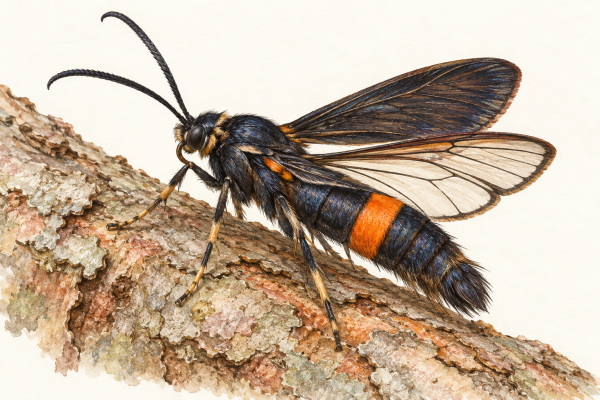
Primary hosts: Peaches and other stone fruit trees.
The greater peachtree borer is a clearwing moth that resembles a wasp. Its larvae tunnel into the lower trunk and root crown of stone fruit trees.
This feeding can interfere with the movement of water and nutrients through the tree, causing weakened growth and potentially killing severely infested trees.
Signs of infestation may include a gummy substance mixed with sawdust-like material near the base of the trunk.
The greater peachtree borer is considered one of the more destructive pests affecting stone fruit trees.
Oriental Fruit Moth
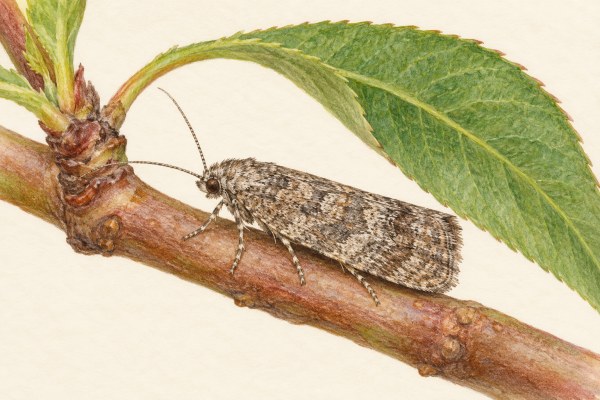
Primary hosts: Peaches and other stone fruits.
Oriental fruit moth larvae attack both young tree shoots and developing fruit.
Early in the growing season, larvae tunnel into tender shoots, causing the tips to wilt and die. Later generations may enter the fruit itself, making it unsuitable for sale or consumption.
Depending on growing conditions, oriental fruit moths may produce approximately four to six generations per year.
Regular monitoring is important because damage can occur throughout much of the growing season.
Western Cherry Fruit Fly
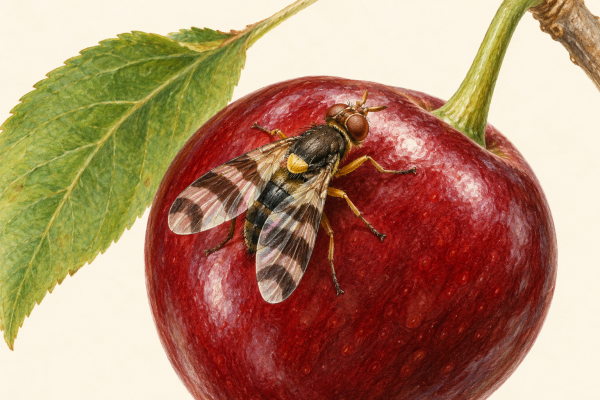
Primary hosts: Cherries.
The western cherry fruit fly is a serious concern for cherry growers.
Adult flies lay eggs beneath the skin of developing cherries. After hatching, the larvae feed inside the fruit, often making the cherries unsuitable for consumption or commercial sale.
Western cherry fruit flies generally produce one generation per year.
Despite having only one generation, infestations can cause substantial damage to cherry crops.
Peach Twig Borer
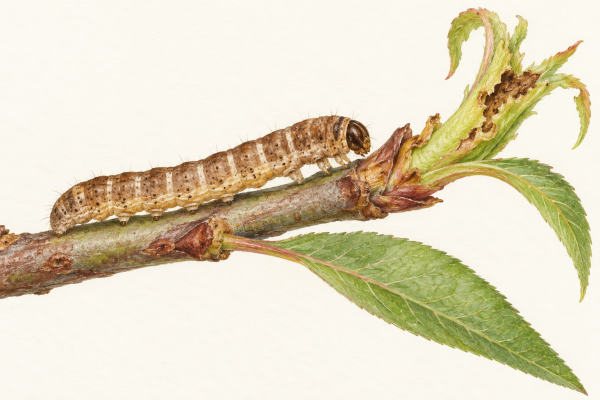
Primary hosts: Peaches and other stone fruits.
Peach twig borers are small moths whose larvae feed on young shoots and developing fruit.
In spring, larvae may bore into tender shoots, causing wilting or dieback. Later in the season, they may damage ripening fruit.
Depending on conditions, peach twig borers can produce approximately two to four generations per year.
Proper pruning, monitoring, and appropriate pest management can help limit damage.
Pear Psylla
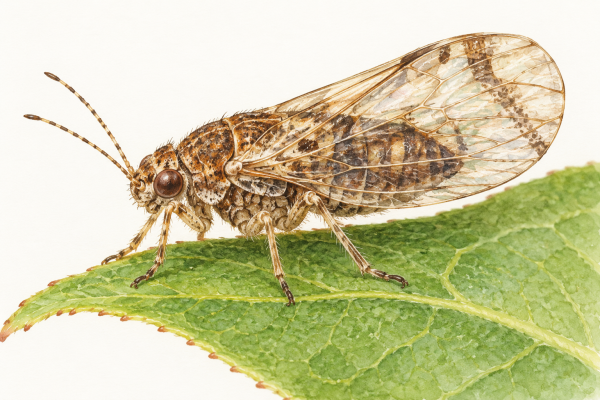
Primary hosts: Pear trees.
Pear psylla are small insects that feed on pear tree leaves and shoots by sucking plant sap.
As they feed, they produce a sticky substance called honeydew, which can encourage the growth of black sooty mold.
Heavy infestations can weaken trees, damage leaves, and affect fruit quality.
Pear psylla may produce up to five generations annually, making ongoing monitoring important for pear growers.
Spotted Wing Drosophila
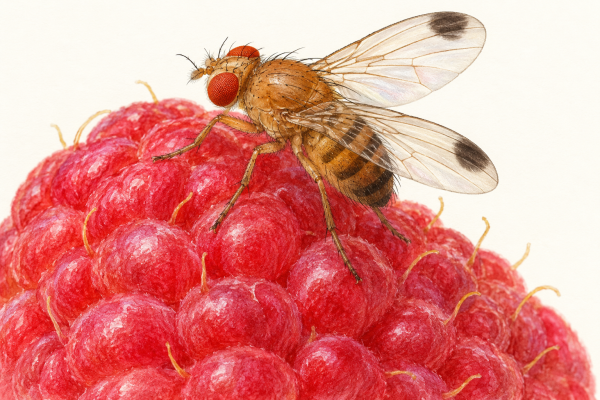
Primary hosts: Cherries, berries, and other soft-skinned fruits.
Spotted wing drosophila are tiny fruit flies that can lay eggs in ripening fruit before it has been harvested.
The larvae develop inside the fruit, causing it to soften and deteriorate.
Unlike common fruit flies that are attracted primarily to overripe or decaying fruit, spotted wing drosophila can attack otherwise healthy, ripening fruit.
Under favorable conditions, this pest can reproduce rapidly, potentially producing numerous generations during a growing season.
The speaker’s notes indicated that this pest had not been observed locally for an extended period. However, because spotted wing drosophila is established in other growing regions, its current local status should be confirmed with the district.
Spotted Lanternfly
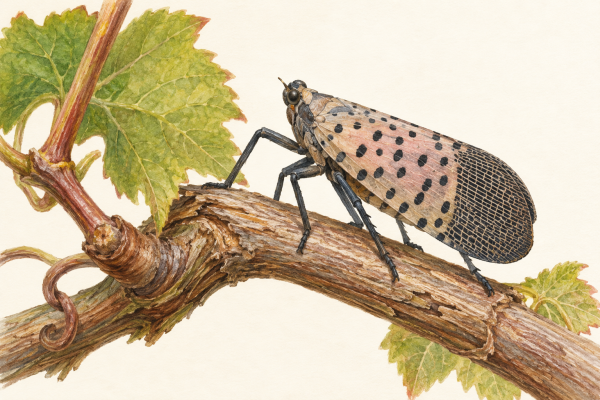
Primary hosts: Grapevines and a variety of woody plants.
The spotted lanternfly is an invasive insect that has caused significant agricultural concerns in parts of the eastern United States.
It feeds on plant sap, particularly from woody stems and branches. Large populations can weaken plants, reduce productivity, and create substantial amounts of sticky honeydew.
Grapevines are among the crops particularly vulnerable to damage.
Spotted lanternflies generally produce one generation per year.
According to the information presented at the meeting, spotted lanternfly had not been detected in Mesa County as of October 2026.
Preventing its introduction is important because the insect and its egg masses can travel on vehicles, equipment, and other transported materials.
Japanese Beetles: An Ongoing Concern in Grand Junction
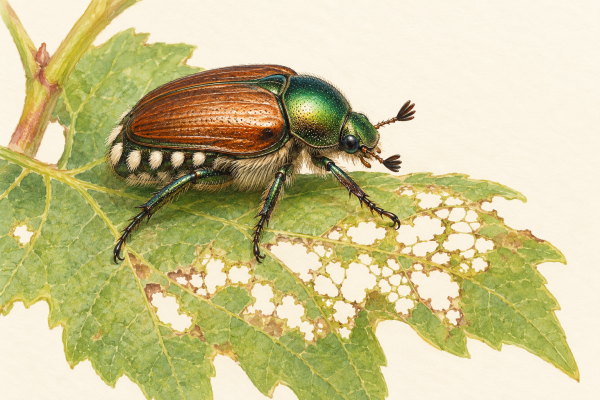
Of all the pests discussed during the presentation, Japanese beetles received particular attention because of recent efforts to control their population in Mesa County.
Japanese beetles are invasive insects that can feed on more than 300 types of plants, including ornamental landscaping, fruit trees, grapevines, and garden plants.
Some of their preferred plants include:
- Roses and flowering plants
- Grapevines
- Peach trees and other fruit trees
- Virginia creeper
- Basil and other garden plants
- Various shade trees and ornamental shrubs
Adult Japanese beetles feed on leaves, flowers, and sometimes fruit. They often feed in groups, leaving behind leaves with a distinctive skeletonized appearance.
Understanding the Japanese Beetle Life Cycle
Japanese beetles produce one generation per year, but they spend much of their lives underground.
During the summer, generally June through August, adult beetles lay eggs in the soil.
After hatching, the larvae, known as grubs, feed on grass and other plant roots. This feeding can damage lawns, sometimes creating patches of dead or weakened turf.
As temperatures cool, grubs move deeper into the soil to survive winter, sometimes reaching depths of approximately 10 to 12 inches.
In spring, they move closer to the surface, resume feeding, and eventually develop into adult beetles.
Adults generally emerge between late spring and summer, when they begin feeding on aboveground plants.
Japanese Beetle Eradication Efforts in Mesa County
Mesa County has been monitoring Japanese beetles since the 1990s.
In the early 2000s, the county achieved a notable success in its Japanese beetle eradication efforts. However, new beetles were discovered in 2023, prompting renewed monitoring and treatment.
According to the presentation, the district’s recent efforts have included:
- Treatment of approximately 749.6 acres across Mesa County.
- Treatment involving approximately 2,546 properties.
- A reduction from roughly 5,000 beetles detected in 2023 to approximately 1,200 in 2026.
These figures reflect information shared during the October 2026 presentation and should be understood as reported monitoring results rather than a precise count of every beetle in the area.
Where Have Japanese Beetles Been Found in Grand Junction?
Recent Japanese beetle activity has been concentrated primarily in northern Grand Junction.
Areas mentioned during the presentation include neighborhoods and properties around Canyon View Park, Bookcliff Country Club, Wilson Ranch, Northridge, and Meander Drive.
These are examples of areas where monitoring has occurred, not a complete list of affected properties.
The presence of beetles in a neighborhood does not necessarily mean every property has an infestation.
What Can Homeowners Do About Japanese Beetles?
The first step is identifying the insect correctly.
Japanese beetles have metallic green bodies and copper-colored wing covers. Adults are relatively small, measuring approximately half an inch long.
Homeowners who suspect Japanese beetles on their property should contact the Upper Grand Valley Pest Control District for guidance.
The district may be able to provide trapping or monitoring assistance, depending on the property’s location and current program availability.
Products such as GrubEx and GrubGONE! were also mentioned during the presentation as potential soil-treatment options. However, these products contain different active ingredients and must be used according to their labels and appropriate application timing.
Homeowners should confirm which treatments are recommended locally before applying pesticides.
What Is the Upper Grand Valley Pest Control District?
The Upper Grand Valley Pest Control District works to protect local agriculture by monitoring and managing designated pests within its service boundaries.
The district is supported through a property-tax mill levy and provides services intended to reduce the economic damage agricultural pests can cause.
Its work includes pest monitoring, public education, research support, and assistance with certain fruit tree management and removal efforts.
Fruit Tree Removal Assistance
One particularly useful program for homeowners is the district’s fruit tree removal assistance.
According to the presentation, the district offers a cooperative program that may help eligible property owners remove up to five fruit trees.
This program is intended to reduce pest breeding sites, particularly where trees are no longer maintained or producing useful fruit.
Eligibility depends on whether the property is located within the district’s boundaries, along with current program requirements and available funding.
Homeowners should contact the district before arranging tree removal to confirm whether assistance is available.
Buying a Home With Fruit Trees in the Grand Valley?
Fruit trees can be a wonderful feature of a property. There is something special about picking peaches, apples, cherries, or pears from your own backyard.
However, fruit trees also require regular care.
If you’re considering purchasing a home with an established orchard or even a few backyard fruit trees, it’s worth learning what maintenance those trees will need.
Before purchasing, consider the trees’ general health, whether they have been regularly pruned and maintained, and whether there is visible evidence of insect or disease damage.
You may also want to find out whether the property falls within the Upper Grand Valley Pest Control District’s boundaries and whether assistance programs are available.
For larger orchards or properties intended for agricultural production, consulting a qualified arborist or agricultural specialist can help you better understand the condition of existing trees.
What If You Don’t Want to Maintain Fruit Trees?
Not every homeowner wants the responsibility of pruning, spraying, harvesting, and cleaning up fallen fruit.
If you purchase a property with fruit trees that you don’t intend to maintain, removal may be a better option than allowing them to become neglected.
Unmaintained fruit trees can provide breeding sites for certain pests, potentially affecting neighboring properties and commercial orchards.
This is particularly important in areas near active agricultural operations.
Before removing trees, contact the Upper Grand Valley Pest Control District to learn whether your property qualifies for assistance.
Protecting the Grand Valley’s Agricultural Heritage
One of the things that makes living in the Grand Valley special is the combination of residential neighborhoods, open farmland, orchards, and vineyards.
Our local agricultural community contributes to the area’s character, economy, and quality of life.
Whether you have a large orchard, a single peach tree, or simply enjoy the locally grown produce available throughout the valley, understanding agricultural pests is one way to help protect this important part of our community.
For more information: Visit the Upper Grand Valley Pest Control District website to learn about pest monitoring, available programs, and district services.
This article is based on information presented by Ryan Surad with the Upper Grand Valley Pest Control District in October 2026. Pest populations, treatment recommendations, and assistance programs may change. Contact the district for the most current information.


Leave a Reply