Information based on a Radon Gas and Radon Monitoring class presented by Russell Baker, a certified professional inspector and radon measurement professional, along with information from the Colorado Department of Public Health and Environment and the U.S. Environmental Protection Agency.
Radon is a naturally occurring radioactive gas produced by the breakdown of uranium found in soil and rock beneath the Earth’s surface. You can’t see it, smell it, or taste it, but it can enter homes and accumulate indoors.
Radon is found throughout Colorado, including Mesa County. Whether you live in Grand Junction, Fruita, Palisade, or another part of the Grand Valley, testing is the only reliable way to determine the radon levels in your home.
According to the Environmental Protection Agency (EPA), radon is the second leading cause of lung cancer in the United States, after smoking, and the leading cause among people who have never smoked.
The good news is that radon can be detected through testing, and elevated indoor levels can usually be reduced with a properly installed mitigation system.
If you’re buying or selling a home in the Grand Valley, understanding radon testing, disclosure requirements, and mitigation options can help you make informed decisions during the real estate transaction.
How Does Radon Enter a Home?
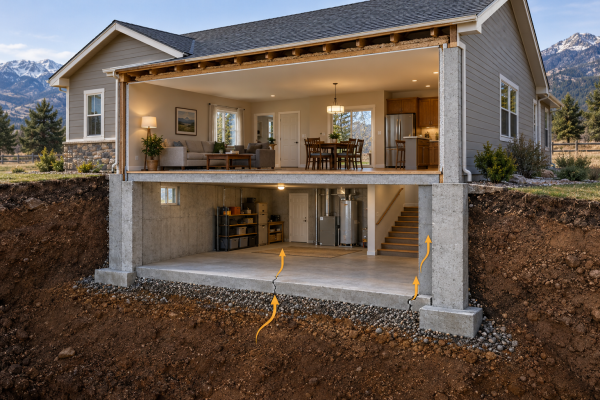
Radon forms naturally underground and can move through soil into the air. When a home sits over soil containing radon, the gas may enter through openings in the foundation.
Common entry points include cracks in concrete floors and foundation walls, gaps around plumbing pipes, construction joints, and openings around sump pits.
Once inside, radon can accumulate, particularly in lower levels of the home.
Although basements are often associated with radon, homes without basements can also have elevated radon levels. This includes slab-on-grade homes and properties with crawl spaces.
Likewise, a newly constructed home isn’t necessarily protected from radon simply because it meets modern building standards.
Is Radon Common in Grand Junction and Mesa County?
Colorado has a well-documented radon concern due in part to the natural geology found throughout the state.
The Colorado Department of Public Health and Environment recommends radon testing for homes throughout Colorado.
However, it’s important not to assume that every home in the Grand Valley has elevated radon levels.
Radon concentrations can vary significantly from one property to another. Two neighboring homes can have very different results, even when they have similar construction.
Factors such as underlying soil conditions, foundation design, ventilation, and weather can influence indoor radon concentrations.
For buyers, this means that a low radon test result from a neighboring property does not guarantee that the home you’re purchasing will have similarly low levels.
The only reliable way to know is to test the individual property.
What Radon Level Is Considered High?
Radon is measured in picocuries per liter of air, abbreviated as pCi/L.
The EPA has established an action level of 4.0 pCi/L. At or above this level, the EPA recommends taking steps to reduce radon concentrations in the home.
However, 4.0 pCi/L is not a dividing line between safe and unsafe air. The EPA states that there is no known completely safe level of radon exposure and recommends considering mitigation when levels fall between 2.0 and 4.0 pCi/L.
Here is a general guide to interpreting radon test results:
| Radon Level | EPA Recommendation |
|---|---|
| Below 2.0 pCi/L | Generally lower concern, but not zero risk |
| 2.0 to 3.9 pCi/L | Consider mitigation |
| 4.0 pCi/L or higher | Take action to reduce radon |
Radon measurements can fluctuate throughout the year. A short-term test provides useful information, especially during a real estate transaction, but it does not necessarily represent the home’s exact annual average.
Radon Testing During a Real Estate Transaction
Radon testing is commonly considered during the inspection period of a home purchase. Typically a short term radon test by certificated radon measurement professional is $100-$200. For buyers, it provides an opportunity to evaluate a potential indoor air quality concern before completing the purchase. For sellers, understanding the home’s radon levels ahead of time may help reduce surprises during the transaction. There are cheaper and even free options for a longer term test.
How Is a Radon Test Performed?
There are two general categories of radon testing: short-term and long-term.
Short-term radon testing is commonly used in real estate transactions because results can be obtained relatively quickly. Many professional tests are conducted over a minimum period of 48 hours, using equipment or testing methods designed for radon measurement.
During the test, certain conditions must be maintained to help ensure reliable results. These generally include keeping exterior windows and doors closed, except for normal entry and exit, and following the testing professional’s instructions.
Long-term radon testing measures radon over a longer period, typically more than 90 days. These tests can provide a better estimate of a home’s average radon exposure over time.
Because real estate transactions usually have specific inspection deadlines, short-term testing is often the more practical option for buyers.
In Colorado, radon measurement professionals are subject to state licensing requirements. Buyers and sellers should use a properly licensed professional when arranging testing as part of a transaction.
Is Radon Testing Required When Buying a Home in Colorado?
Colorado strongly recommends that all home buyers have an indoor radon test performed before purchasing residential property.
However, the state’s disclosure requirements do not automatically mean that every residential property must undergo a new radon test before it can be sold.
A buyer may choose to arrange testing as part of their inspection process, subject to the terms and deadlines of the purchase contract.
If elevated levels are discovered, the buyer and seller can discuss possible solutions before closing.
These discussions may include having a mitigation system installed, negotiating a seller concession, or making another arrangement acceptable to both parties.
A seller is not automatically required to install a radon mitigation system simply because a buyer’s test reveals elevated levels. The parties’ contractual rights and obligations depend on the purchase agreement and applicable law.
Colorado’s Radon Disclosure Requirements for Sellers
Colorado has specific laws addressing radon disclosures in residential real estate transactions.
Under legislation enacted in 2023, residential real estate sellers must provide buyers with known information about the property’s radon history.
This includes information about previous radon testing, known concentrations, and mitigation systems, along with available related reports and documentation.
Colorado residential purchase contracts also contain a radon disclosure warning explaining the potential health risks and recommending testing.
For sellers in Grand Junction and throughout Mesa County, the important takeaway is simple: If you have information about radon testing or mitigation at your property, disclose it accurately.
For example, if your home was tested several years ago and the result was elevated, that information remains relevant even if you subsequently installed a mitigation system.
Likewise, previous low test results should be disclosed when required, rather than assuming they are no longer important.
Providing accurate information helps buyers understand the property’s history and reduces the likelihood of misunderstandings later in the transaction.
What Happens If a Home Tests High for Radon?
An elevated radon test result does not automatically mean a home is unsafe to occupy or that the purchase should be canceled.
It does mean the buyer should understand the results and consider appropriate next steps.
Depending on the test result and circumstances, those steps may include confirming the results, obtaining a mitigation estimate, or negotiating how mitigation will be handled.
Most importantly, radon is a condition that can often be managed.
How Does a Radon Mitigation System Work?
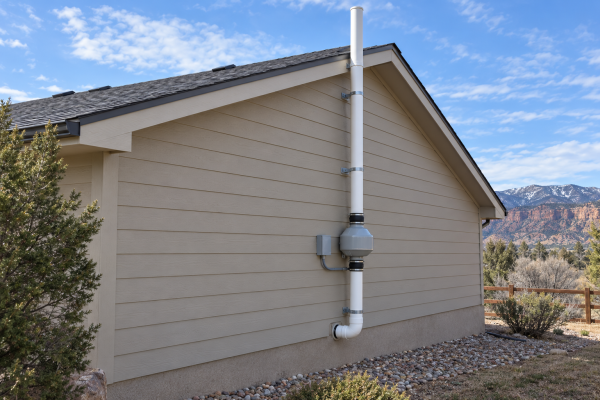
A common mitigation method is called active soil depressurization.
In a typical installation, a contractor places a pipe through or beneath the foundation and connects it to a specialized fan.
The fan creates suction that draws radon-containing soil gas from beneath the home and vents it safely outdoors, where it can disperse.
This helps prevent radon from entering the living space.
The exact installation depends on the home’s construction. A house with a basement may require a different approach than one built on a crawl space or concrete slab.
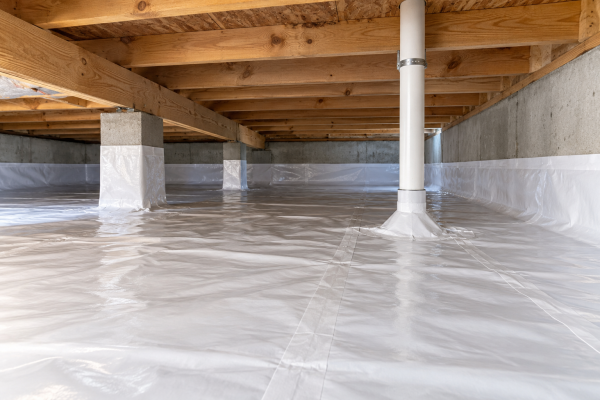
A qualified radon mitigation professional can evaluate the property and recommend an appropriate system.
Does a Radon Mitigation System Eliminate All Radon?
Not necessarily.
The goal of a mitigation system is to reduce indoor radon concentrations, ideally well below the EPA’s action level.
Results vary depending on the home, the original radon concentration, and the design and installation of the system.
After installation, the home should be retested to verify that the system is reducing radon levels effectively.
Mitigation systems also require ongoing attention. Homeowners should periodically check that the system is operating properly and follow recommended retesting and maintenance schedules.
Buying a Home That Already Has a Radon Mitigation System
It’s not unusual to encounter a home with an existing radon mitigation system.
For buyers, the presence of a system shouldn’t automatically be viewed as a negative feature. It may indicate that a previous owner identified elevated radon levels and took steps to address them.
However, buyers should still evaluate the system rather than assuming it is working correctly.
Consider asking for the original radon test results, installation documentation, maintenance history, and any post-installation testing.
A current radon test can help determine whether the system is continuing to perform as intended.
It’s also important to understand that a mitigation system is a mechanical system. Components such as fans may eventually need replacement.
Should Sellers Test for Radon Before Listing Their Home?
Testing before listing can be a practical option for sellers who want to better understand their property’s condition.
If the results indicate elevated radon concentrations, the seller may have time to obtain estimates and consider mitigation before accepting an offer.
Addressing the issue in advance may help simplify later negotiations.
However, sellers should understand that testing creates information that may need to be disclosed to prospective buyers, whether the results are high or low.
There is no single approach that works best for every seller. The decision should be made with an understanding of the property’s history, the applicable disclosure requirements, and the seller’s goals.
Can Radon Levels Change Over Time?
Yes. Radon levels are not necessarily constant.
Seasonal weather conditions, changes in air pressure, home renovations, ventilation patterns, and changes to the foundation can affect radon concentrations.
For example, finishing a basement, modifying a heating or ventilation system, or completing significant foundation work may change how air moves through the home.
A home that tested low several years ago may have different results today.
For this reason, the EPA and CDC recommend testing when buying or selling a home and considering additional testing after certain renovations or changes in how the home is used.
Does a Home’s Age or Construction Type Matter?
Any home can have elevated radon levels.
Older homes may have foundation cracks or other openings that allow soil gases to enter. However, newer homes can also experience elevated radon levels.
Similarly, a home with a basement is not automatically more hazardous than a home without one.
While construction details can influence radon entry, they cannot reliably predict a home’s actual radon concentration.
Some newer homes may include radon-resistant construction features, but these features do not replace the need for testing.
If you’re purchasing new construction in the Grand Valley, ask the builder whether radon-resistant features were installed and whether the completed home has been tested.
Radon and Real Estate in the Grand Valley
Whether you’re buying your first home in Fruita, selling a property in Grand Junction, or relocating to Palisade, radon is one of several environmental considerations worth understanding during a real estate transaction.
An elevated test result doesn’t necessarily need to derail a purchase.
Instead, it provides information that buyers and sellers can use to evaluate the property and discuss reasonable solutions.
For buyers, testing offers valuable information about a home before making a significant investment.
For sellers, accurate disclosure and a clear understanding of the property’s radon history can help make the transaction more transparent.
Ultimately, the goal is not to create unnecessary concern about radon. It’s to ensure that homeowners have the information they need to make informed decisions.
Where Can You Learn More About Radon in Colorado?
For additional information about radon testing, mitigation, and real estate transactions, the following government resources are helpful:
Colorado Department of Public Health and Environment
Information about radon in Colorado real estate transactions, including state disclosure requirements and resources for buyers and sellers.
U.S. Environmental Protection Agency
Home Buyer’s and Seller’s Guide to Radon
A detailed guide covering radon health risks, testing procedures, mitigation, and considerations during the home-buying process.
Colorado Division of Real Estate
Colorado Division of Real Estate
Information about Colorado real estate contracts, disclosures, and professional licensing.
This article is intended for general educational purposes and should not replace advice from a licensed radon measurement professional, mitigation contractor, medical professional, or attorney. Radon testing recommendations and real estate requirements may change.


Leave a Reply